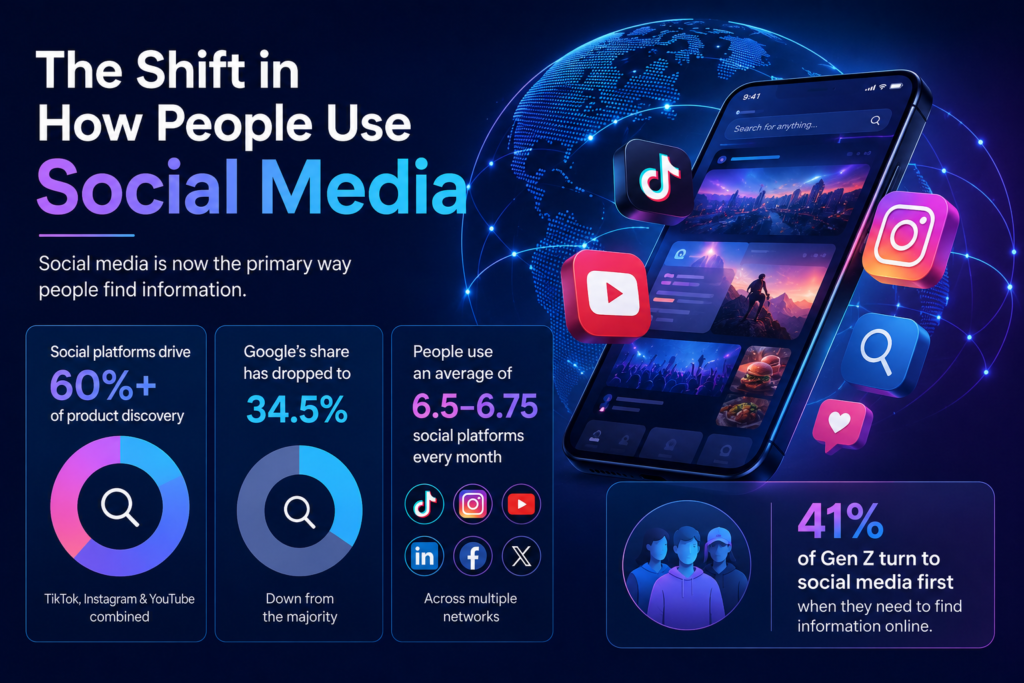
The world of social media in 2026 is busier and more fragmented than ever before. Recent data shows that there are now 5.79 billion active social media user identities worldwide, which is nearly 70% of the global population. On average, a typical user now hops between 6.5 to 6.75 different social platforms every single month. For businesses, this means you can no longer afford to live on just one app. If your audience is everywhere, your content needs to be everywhere, too.
However, the ‘post everywhere’ strategy has changed. In the past, you might have been able to copy and paste the exact same caption and video to every site. Today, that approach can actually hurt your reach. Audiences in 2026 are becoming more selective; they want authentic, human voices and are quickly moving away from what many call ‘AI slop’. To succeed, you need a smart operations plan that focuses on content repurposing rather than just blind cross-posting.
Mastering the COPE Strategy
To keep up with the demand for content without burning out, professional teams use a workflow called COPE: Create Once, Post Everywhere. But there is a secret to making COPE work: you shouldn’t “paste” everywhere, instead you should “package” everywhere.
A ‘native package’ means taking one core idea and changing the hook, the structure, and the call-to-action (CTA) to fit the specific culture of each platform. Here is how a high-level repurposing workflow looks in 2026:
1. Identify Your Content Pillar
Everything starts with a source asset or a pillar. This could be a long YouTube video, a detailed blog post, a newsletter, or even a recorded webinar. A good pillar should have at least 3 to 7 distinct points or teachable moments.
2. Extract Content Atoms
Instead of trying to summarize the whole pillar in every post, you atomize it. This means breaking the big piece into reusable micro-assets. From one webinar, you might pull five 60-second video clips, ten quote graphics, and three text-based checklists. By the time you are done, one pillar could easily turn into 18 or more pieces of content per week.
3. Create a Hook Bank
The hook is the most important part of your post. It is the first two seconds of a video or the first line of a caption that stops the scroll. In 2026, you should write 10 to 20 different hooks for every single pillar. Some could be contrarian (Unpopular opinion: ___), some based on data (A new report found ___), and others based on common mistakes (The biggest mistake with ___ is ___).
Adapting Content for Different Platforms
Each social network has its own “vibe” and technical requirements. If you ignore these, your content will look like an “imported” ad, and users will ignore it.
- LinkedIn: This platform has seen a massive surge in professional conversations, reaching 1.3 billion members. Interestingly, text posts and carousels perform best here. LinkedIn carousels, in particular, see a staggering 21.77% median engagement rate, which is the highest of any format on any platform. Keep your paragraphs short and use specific numbers to build authority.
- TikTok vs. Instagram Reels: Both use a 9:16 vertical video format, but their audiences differ. TikTok users spend the most time in-app, about 1 hour and 37 minutes daily, and they look for funny or entertaining content. Instagram Reels are heavily used for discovery, but the Instagram algorithm has recently been updated to penalize unoriginal or reposted content that doesn’t add meaningful value. If you move a video from TikTok to Reels, ensure you are adding unique text or your own creative edit.
- YouTube Shorts: This is the fastest-growing short-form video arena, receiving over 200 billion daily views. It is highly searchable. While a TikTok caption might use a catchy hook, a YouTube Short title should use SEO keywords so people can find it through search months later.
- Threads and X (Twitter): These text-first platforms are great for quick thoughts. Threads have grown to 400 million monthly users, surpassing X in mobile usage in early 2026. However, only 12% of marketers are currently using it, which represents a huge opportunity to reach people before it gets crowded.
The AI Challenge: Authenticity vs. Efficiency
AI is a double-edged sword in 2026. While 83% of marketers say AI helps them create significantly more content, there is a growing trust gap. 88% of consumers say they trust social media news less because of AI-generated content.
Even more alarming for brands: 50% of Gen Z users have blocked or unfollowed accounts for posting AI slop, content that feels low-effort or unoriginal. The winning strategy is to use AI as an assist layer for drafting and brainstorming, but always keeping a human voice at the center. Human-generated content remains the #1 priority for users in 2026.
Navigating Copyright and Originality
As you repurpose content, you must stay on the right side of the law and platform rules.
- Originality Penalties: Instagram and Facebook now discourage aggregators who simply repost other people’s work. To be recommended in feeds, a post must either be something you personally created or include third-party content that you have materially edited with unique graphics or context.
- Copyright Risks: Never use trending sounds for a brand account without checking permissions, as this is considered commercial intent and can lead to lawsuits with damages up to $150,000.
- Permissions: Always get proper licensing or permission (often via DM) before using User-Generated Content (UGC). If you feature people in your videos, ensure they sign a release form for their likeness.
Operations: Native Posting vs. Third-Party Tools
A major decision for any social media team is whether to post natively (directly in the app) or use a third-party management tool.
Native Posting gives you full access to the latest platform features, like new Instagram stickers or trending TikTok filters, which third-party tools often lack. It also allows for real-time engagement, which is critical since 73% of consumers say they will switch to a competitor if a brand doesn’t respond on social media.
Third-Party Tools are essential for teams managing more than three accounts. They provide a centralized dashboard, allow for bulk scheduling, and offer unified analytics that make it much easier to see which platforms are actually driving ROI.
Best Practices for 2026
To wrap up your operations strategy, follow these Minimum Viable Adaptation rules for every post:
- Change the Hook: The first line must fit the platform’s specific audience.
- Adjust the Structure: Use line breaks for LinkedIn, but keep it snappy for X.
- Platform-Specific CTAs: On Instagram, ask for a save; on LinkedIn, ask for a comment; on TikTok, ask for a follow.
- Formatting: Remove link in bio references when posting to Facebook or LinkedIn, where you can often include the link directly in the post or comments.
By focusing on packaging over pasting, you can turn a single hour of content creation into a week-long, multi-platform presence that builds trust and drives real business results in 2026.