From waiting weeks for one video to generating a hundred in a single afternoon, the creative process in advertising has changed forever.
83% of ad executives now use AI in their creative process (IAB, 2026)
40% of all digital video ads will be AI-generated by end of 2026
$2K cost to produce a broadcast-quality 30-second TV spot using AI (vs. $250K+ traditionally)
Not long ago, making a polished ad meant hiring a production crew, booking studios, coordinating with talent, going through rounds of edits, and waiting. A single video could take weeks to go from idea to finished product. For many small businesses, that process was simply out of reach.
Today, that same video can be made in minutes, using AI tools. And it is not just about speed. The quality has improved so dramatically that viewers often cannot tell the difference between an AI-made ad and one shot by a real crew.
This is not a distant future. It is happening right now, at scale, across every major advertising platform on the internet.
The Numbers That Tell the Story
The clearest way to understand how fast things have changed is to look at the data. According to the Interactive Advertising Bureau, 83% of advertising executives are now using AI somewhere in their creative process, a jump from just 60% two years ago. Nearly nine out of ten video ad buyers are either already using AI for creative production or actively planning to.
As of early 2026, around 40% of all digital ad creative is expected to be built or enhanced using AI, according to research from the IAB. That is not a niche experiment. That is close to half the advertising industry shifting how it works at a fundamental level.
“A hundred videos can now be completed in roughly the same window it used to take to get one video from a creator.”
What “AI Creative” Actually Means?
When people talk about AI creatives, they generally mean three things:

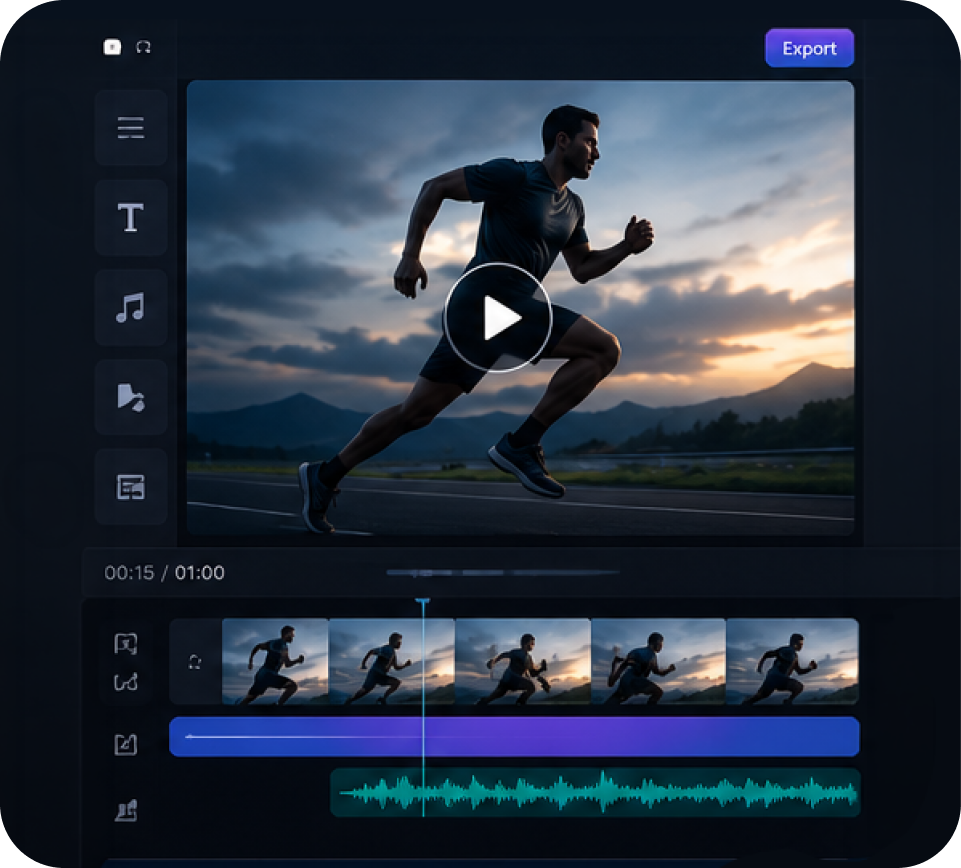
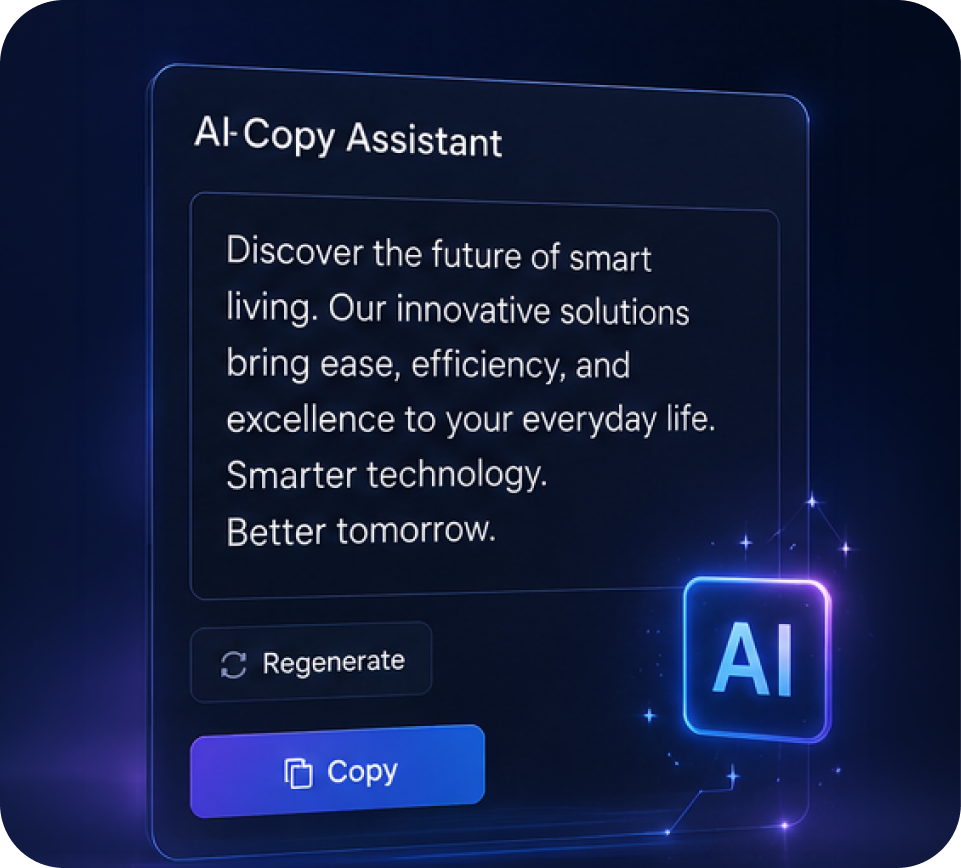
All three are now widely used in advertising, sometimes together. AI image tools can take a product photo and turn it into a lifestyle shot, place it in different settings, or generate entirely new visuals from a text description. AI video tools can take a single image or a short prompt and generate a realistic video clip, complete with motion, lighting, and even human-looking characters. AI writing tools handle headlines, captions, product descriptions, and ad copy.
The most advanced platforms now combine all three. TikTok, for instance, has tools that can generate a complete video ad, with visuals, voice, music, and text, from nothing more than a product name and a sentence about what you want to say. Google’s tools let advertisers create studio-quality video from a text prompt directly inside the ad manager. Meta is working toward a future where an advertiser provides a website URL and a budget, and the platform handles everything else, creative included.
What the Major Platforms Are Doing Right Now
- Meta Advantage+
Fully automated campaigns where AI generates images, writes copy, picks audiences, and optimises bids. Accounts using consolidated Advantage+ setups have seen up to 32% reduction in cost per result.
- Google AI Max & Performance Max
Eliminates keyword targeting entirely. Gemini matches your landing page with what users are searching for. In Q4 2025 alone, advertisers generated nearly 70 million creative assets using Gemini inside Google’s ad tools, a 3x year-over-year increase.
- TikTok / ByteDance Seedance 2.0
Generates multi-shot video sequences from a single product photo or text prompt, at up to 60 frames per second. What used to take a creative team a full day now takes five minutes.
- Google Veo 3 in Ads Asset Studio
Produces studio-quality video directly from a text description, available inside the standard ad platform.
Why Speed Matters More Than You Think
One of the biggest problems in digital advertising is called creative fatigue. When people see the same ad repeatedly, they stop paying attention. Their brains start filtering it out. Click rates drop. The ad stops working. The solution has always been to refresh the creative, make new versions, try new angles, test different messages.
With traditional production, that refresh cycle was slow and expensive. With AI, it is almost instant. Teams can generate dozens of variations of an ad, test them all at once, see which one performs best, and immediately create more versions based on what is working. The feedback loop that used to take months now takes days.
According to Smartly’s 2026 Digital Advertising Trends Report, which surveyed 450 marketing leaders worldwide, 41% of marketers still say it takes three to four weeks to launch a digital campaign from asset creation to going live. Only 3.6% can go live in under a week. AI is the single biggest lever that can close that gap.
AI-driven personalised video ads, according to industry data, see a click-through rate three times higher than standard static ads. AI-optimised creatives have shown the potential to deliver up to twice the click-through rates compared to manually designed versions. These are not marginal improvements. They represent a meaningful competitive advantage for businesses that make the shift.
The Platforms Are Not Waiting for You
One important thing many advertisers do not fully appreciate is, the major platforms are not offering AI as an option. They are building it into everything, and in many cases, they are turning it on by default.
Meta, for instance, has rolled out AI features that modify creatives automatically, adjusting brightness, changing backgrounds, even testing different versions of your image without always asking. Some advertisers have found themselves opted into AI features they did not choose. Meta has since introduced tools to save opt-out preferences, but the broader direction is clear: the platforms are automating as much as they can, as fast as they can.
Meta acquired Manus, an AI agent that can analyse media buying and generate creative autonomously, and it has already begun showing up inside the Ads Manager. Meta’s revenue from AI video generation tools reached a $10 billion annualised run-rate in Q4 2025, growing nearly three times faster than overall ad revenue. That kind of growth tells you everything about where the money is flowing and where the industry is heading.
How AI Creative Reduces Costs at Every Stage
- Image creation costs drop by up to 80% compared to hiring a designer or photographer
- Video production costs fall from tens of thousands of dollars to a few hundred
- No more waiting weeks for UGC creators, AI-style “user generated content” can be created in hours
- A/B testing scales from 2-3 variants to hundreds at no extra cost
- Localisation for different regions, languages, and platforms takes minutes instead of weeks
Human Creativity Still Matters, A Lot
Here is the thing that gets lost in all the excitement about AI tools, the technology is only as good as the direction you give it. AI can generate a hundred images, but it cannot tell you which one will resonate with your specific audience, align with your brand’s history, or feel right for a cultural moment.
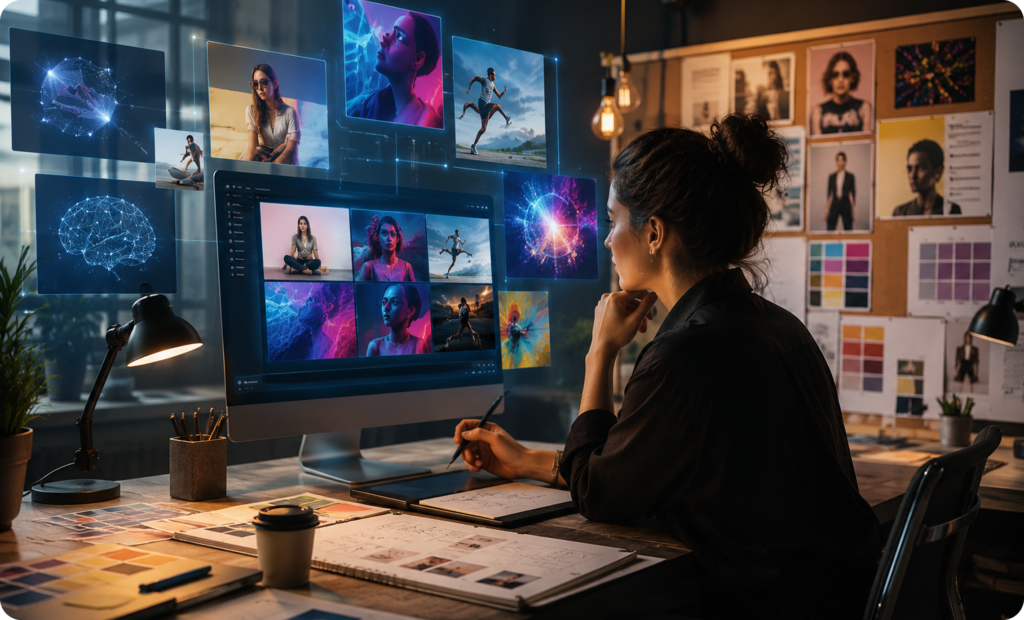
According to a research report, three in four marketers are already concerned that AI-generated creative risks making brands look and sound the same. And 86% said they have already seen AI-generated ads that look nearly identical to content from a competitor. That is the real risk of over-relying on AI without strong human direction.
The brands doing this well are not replacing their creative teams. They are changing what those teams spend their time on. Instead of executing, the creative team is now directing, writing better briefs, setting tighter guardrails, reviewing AI outputs, and adding the details that make something feel genuinely human. Successful campaigns are blending AI efficiency with human storytelling.
The Consumer Perception Gap, Something Every Marketer Should Know
Research from the IAB found that 82% of advertising executives believe that younger consumers feel positive about AI-generated ads. In reality, only 45% of those consumers feel that way. Among Gen Z specifically, 39% report negative feelings toward AI ads, nearly double the number of Millennials who feel the same way. This gap has grown wider since 2024, not narrower. Disclosure, being upfront that an ad used AI can actually help. Research shows that 73% of younger consumers say knowing an ad used AI would not negatively affect their likelihood to buy.
The Practical Takeaways for Marketers and Business Owners
If you are a marketer or a business owner wondering what this all means for you, here is the clearest way to think about it.
First, if you are not using any AI in your ad creative yet, you are already behind. Not catastrophically, but meaningfully. Your competitors who have adopted these tools are producing more creative, testing more variations, and iterating faster than you are.
Second, the entry point is low. AI ad creation tools start at around $20 to $80 per month for subscription access. Compare that to even a single professional photoshoot, which can easily cost thousands. The barrier to experimenting is minimal.
Third, start with what already works. Look at your existing top-performing ad, the one that gets the most clicks or conversions. Use AI to generate ten variations of that ad. Different images, different copy, different colours. Run them all and see what happens. That is the lowest-risk way to start seeing results.
Fourth, keep a human in the review loop. AI does not understand your brand’s history, your audience’s cultural nuances, or your legal obligations. Every AI-generated ad should be reviewed by a person before it goes live, especially in regulated industries like healthcare, finance, or food.
Where Things Are Going From Here
The pace of change is not slowing down. In early 2025, AI creative was only competitive with human-made ads for products priced under $25. By early 2026, that threshold had risen to $100, meaning AI ads are now delivering equivalent results for a much wider range of products. Industry forecasts suggest full performance parity across all price ranges by mid-2027.
Meanwhile, AI creative tools are improving at roughly 30 to 40% per year on quality metrics. Video generation, which looked noticeably artificial just two years ago, is now producing clips that most people cannot distinguish from real footage.
The skill that will define the next generation of great marketers is not technical. It is creative direction. Knowing how to give AI the right inputs, the right brief, the right reference images, the right brand guardrails, is becoming as important as knowing how to write good copy or design a good layout was a decade ago.
AI does not replace the need for good ideas. It just removes the barriers that used to stand between a good idea and a finished piece of creative. For businesses that embrace that shift, the opportunity is enormous. For those that wait, the gap will keep growing.
The tools are here. The results are real. The question now is simply whether you are going to use them.
If you are exploring how to integrate AI into your ad creative process, or want to scale your campaigns without increasing production costs, we can help.
Let Supeiron look at your current setup, identify where AI can create the most impact, and build a system that actually delivers results.
Get in touch with Superion to start building smarter, faster, and more effective advertising. Visit https://superion.in/ for more details.