Social media is not the same place it was five years ago. The way you discover content, the ads you see, the replies brands send you, the videos that show up on your feed, almost all of it is now shaped, in some way, by artificial intelligence.
As of 2025, more than 5.22 billion people around the world use social media, that’s nearly two-thirds of the entire human population. Managing that kind of scale without technology would be impossible. That’s where AI steps in.
The Scale of AI Adoption Is Staggering
A 2025 survey found that 96% of social media professionals now use AI for their work, and nearly three-quarters use it every single day. In 2024, only 37% of marketers were using AI tools daily, by 2025, that figure jumped to 60%. Meanwhile, 84% say they’ve been increasing their AI usage every year.

Only 3.6% of social media managers avoid AI entirely. That number may surprise you, but it shows just how much the industry has already shifted.
The market reflects this too. The AI in social media industry was valued at $2.69 billion in 2025, and is expected to grow to $9.25 billion by 2030, a growth rate of about 28% per year. Clearly, this is not a passing trend.
#1 Content Recommendations
Every time you open Instagram, TikTok, or YouTube and find yourself scrolling for hours, AI is doing the heavy lifting. More than 80% of the content recommendations you see on social media platforms are powered by AI algorithms.
These systems study your behavior constantly, what you like, what you skip, how long you watch something, what time of day you’re online, and even what kind of captions you tend to read all the way through. They then use all of that data to serve you content that keeps you engaged.
For brands, this means their content isn’t seen by everyone who follows them. It’s shown to people who are most likely to actually interact with it. If your content doesn’t hold attention in the first few seconds, the algorithm moves on.
This is why creating genuinely interesting content has become more important than ever. AI feeds reward quality, not just frequency.
#2 AI-Powered Content Creation
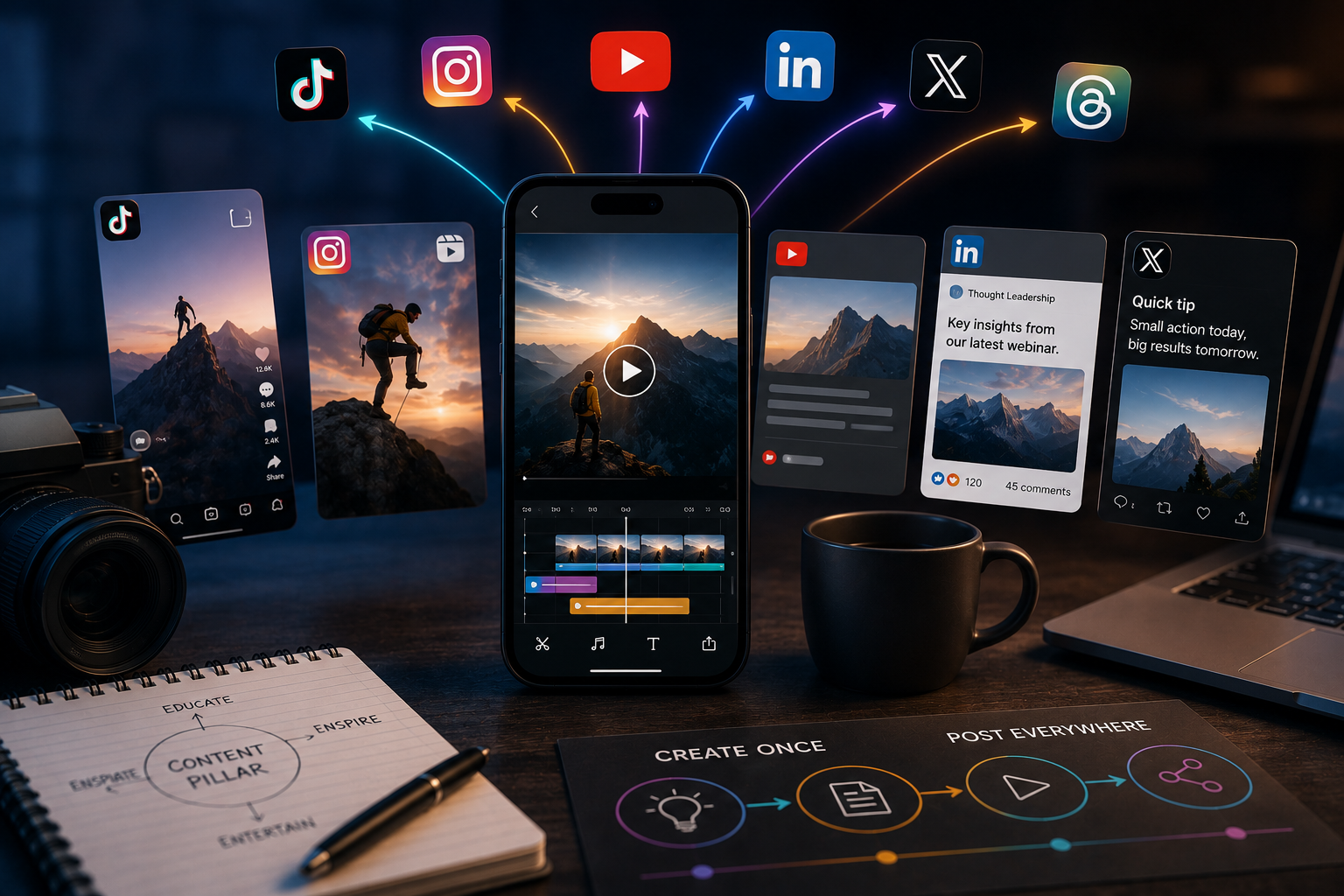
One of the most talked-about uses of AI is in creating the content itself – captions, images, videos, and even entire campaigns.
Among social media professionals, the top use of AI is brainstorming post ideas (78%), followed by writing captions and adapting content for different platforms. A striking 90% of marketers use AI for text-based tasks like drafting and headline writing.
On the visual side, 71% of social media images are now AI-generated. Tools like image generators have made it possible for a single person to produce high-quality visuals in minutes, something that used to take an entire design team days.
For video, AI-powered short-form video now drives 80% of total social media traffic. Emerging tools like text-to-video AI are expected to become even more dominant in the coming years.
The time savings are real. 90% of businesses using generative AI say they’ve seen significant reductions in content production time. And 79% of creators say AI allows them to produce more content faster than they ever could before.
#3 Personalization That Actually Feels Personal
Have you ever noticed how a brand seems to know exactly what you’re interested in? That’s AI at work.
AI systems analyze engagement patterns, your browsing history, past purchases, and interaction data to figure out what kind of content, products, or messages are most likely to resonate with you specifically. Instead of showing every customer the same ad, brands can now deliver different messages to different people based on who they are.
Companies that use AI for personalization report significant improvements in engagement. Users spend more time, click more often, and convert more frequently when the content feels relevant to them.
This kind of one-to-one personalization at scale simply wasn’t possible before AI. You’d need thousands of staff to manually segment audiences and craft individual messages. AI does it automatically, in real time, for millions of people at once.
#4 Sentiment Analysis
Social media generates an enormous volume of conversation every day via comments, reviews, posts, replies, and messages. No human team can read all of it. But AI can.
Sentiment analysis tools use AI to scan through this ocean of content and categorize it, is this comment positive, negative, or neutral? Is this person frustrated, excited, or confused? What topic are people talking about most today?
This lets brands detect problems before they become crises. If a product issue starts trending negatively in comments, the AI flags it immediately rather than three days later when the team finally reads through the backlog.
It also helps brands track how public perception shifts over time. Did a new campaign land well? Is a competitor doing something that’s turning customers against them? Sentiment tools surface these insights quickly.
For customer care teams, this is especially powerful. Rather than reading every single message, staff can focus on the ones the AI has flagged as urgent or negative, making their work far more efficient.
#5 Smarter Paid Advertising
Running ads on social media used to mean setting a budget, picking a target audience, and hoping for the best. AI has made the entire process dramatically smarter.
Today’s AI-powered ad systems like Meta’s Advantage+ automatically test different versions of your ad across different audience segments, find out which combinations work best, and shift your budget accordingly. Meta’s Advantage+ ads have been shown to drive 4% higher click-through rates compared to manually managed ads.
AI also handles real-time bidding. Every time a spot opens up in someone’s feed, platforms run an auction in milliseconds to decide which ad gets shown and how much the advertiser pays. AI systems optimize these bids constantly to make sure you’re getting the best results for your money.
Predictive analytics takes it one step further, AI can now forecast which audience segment is most likely to convert, what time they’re most active, and which creative format will resonate. Rather than learning from failures over weeks, brands can get these answers in hours.
The result: campaigns that are faster, cheaper, and more effective.
#6 Automated Customer Service and Chatbots
People expect fast replies on social media. A 2024 survey found that 76% of social media users expect a brand to respond to them within 24 hours.
For a business receiving thousands of messages a day, this is impossible without help. AI chatbots and automated response systems fill this gap. They handle common questions like shipping timelines, product specs, store hours instantly, at any time of day, without needing a human to be awake.
More advanced AI systems do more than just respond. They filter and categorize incoming messages by urgency, flag complaints that need a human to step in, and route conversations to the right team. This means human staff spend less time answering routine queries and more time handling the complex situations where they actually add value.
Interestingly, 65% of social media users say they’re comfortable with brands using AI for faster customer service.
#7 Content Moderation at Scale
For platforms with billions of users posting millions of pieces of content every day, human moderation alone cannot keep up. AI is now central to keeping social spaces safe.
AI moderation systems scan content for harmful material like hate speech, spam, misinformation, graphic content and either remove it automatically or flag it for human review. The same technology helps brands monitor their own comment sections for policy violations or off-brand behavior.
Brands can also set up AI to watch for specific keywords and alert them the moment a potential crisis appears. If your brand name suddenly starts appearing alongside a negative news story, the system catches it immediately.
That said, moderation AI has its limits. Context is tricky. Sarcasm, cultural references, and gray-area situations still require human judgment. The best approach combines AI’s speed with human understanding.
#8 Analytics and Performance Insights
AI-powered analytics tools have replaced monthly PDF reports with something far more useful, real-time insight into how content is performing.
Rather than waiting until the end of the month to review results, marketers can now see within hours how a post is performing, why it’s working or not, and what adjustments to make. AI tools identify patterns in the data about the best posting times, the most effective content formats, which topics are trending and turn them into clear recommendations.
This shortens the learning cycle dramatically. Instead of spending weeks testing and guessing, teams get feedback fast and can adjust course in real time.
The Human Side Still Matters
AI is very good at patterns. It’s not good at judgment. It can’t detect when a joke might land badly in a specific cultural moment. It doesn’t know when your brand’s tone needs to shift because something serious just happened in the world. It can’t build the kind of genuine connection that makes a customer loyal for years.
A 2025 survey found that 45% of social media professionals are cautious about leaning too heavily on AI because of quality concerns. And 52% of social media users say they’re concerned when brands post AI-generated content without disclosing it.
There’s also the issue of deepfakes, AI-generated images and videos that look completely real. This technology makes it easier to spread misinformation, which is why platforms like Meta now require creators to label AI-generated content on Instagram and Facebook.
The brands that do AI best are the ones that use it as a tool, not a replacement. AI handles the repetitive, the analytical, and the time-consuming. Humans handle the creative, the sensitive, and the authentic.
Looking Ahead
The platforms themselves are also changing. Younger generations now search for information on TikTok and Instagram instead of Google. Nearly one in three consumers skips search engines entirely and starts their journey on social platforms. AI is at the center of how those platforms surface information.
The brands that will win on social media in the next few years aren’t the ones that use AI the most, they’re the ones that use it most wisely.
If you’re looking to make AI actually work for your social media, not just experiment with it, it’s time to rethink your approach.
Superion helps you cut through the noise, simplify your workflow, and turn AI into a real competitive advantage.
Let’s build a smarter, faster, AI-driven social media engine for your brand. Visit https://superion.in/ for more details.